


What to Do With Your Wedding Bouquet After the Party’s Over
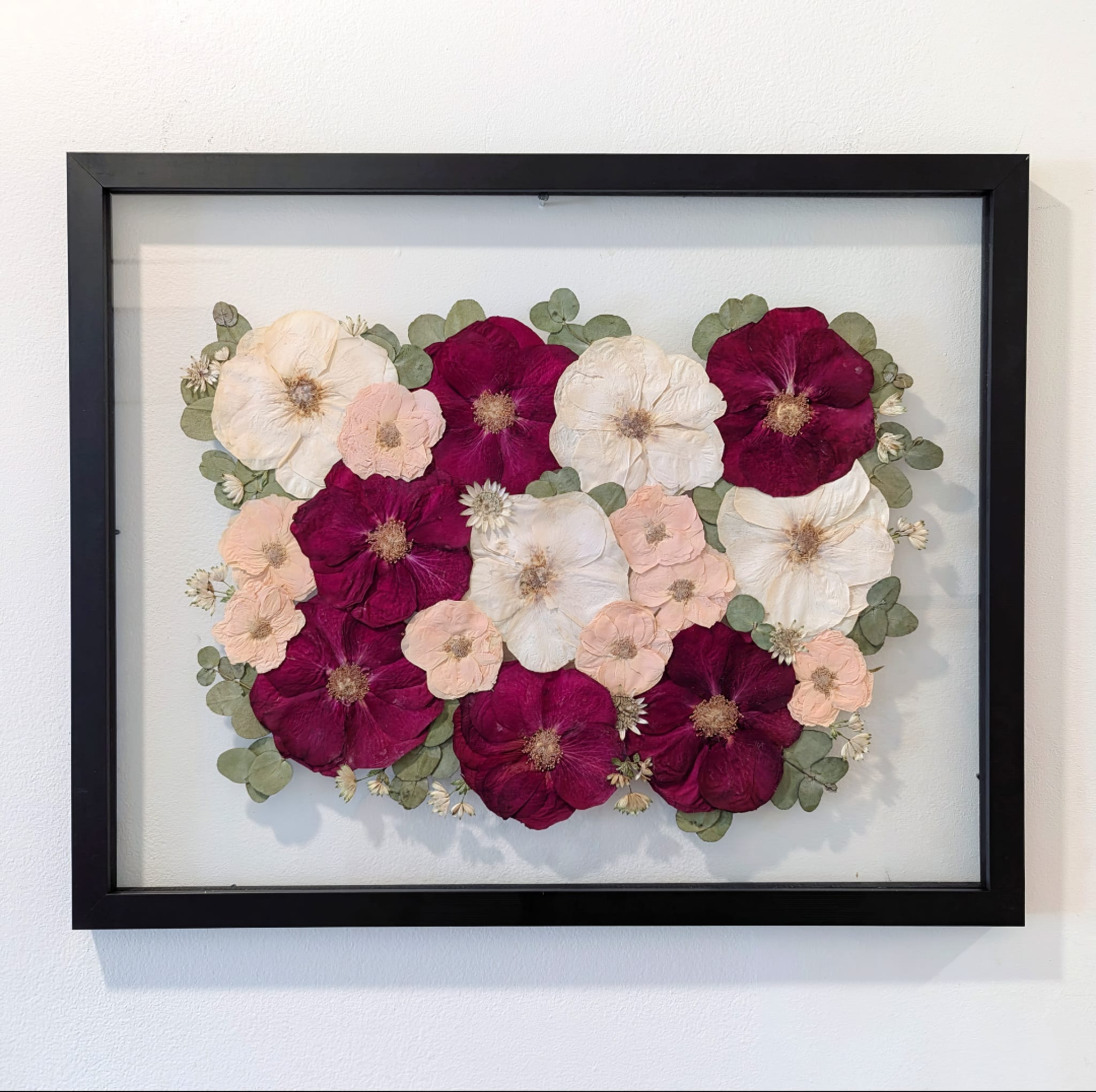
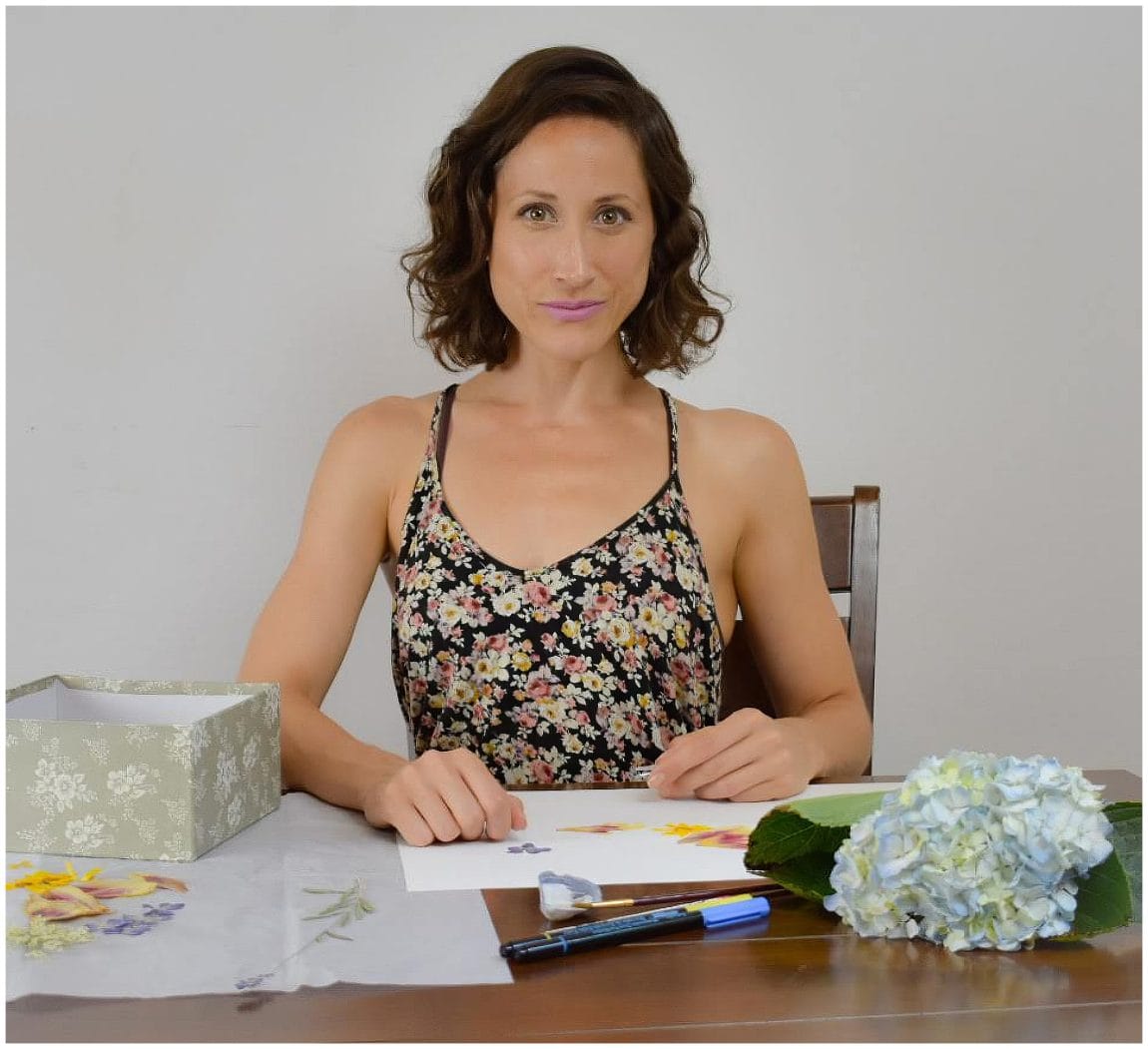
If you’ve ever wondered what to do with your wedding bouquet after the big day besides watching it slowly wilt in your fridge, let us introduce you to Denise White and her Montreal-based studio, Santa Florita.
For the past seven years, Denise has been mastering the art of flower pressing—not through formal training, but the old-fashioned way: lots of experimenting, plenty of trial and error, and an unwavering dedication to getting it just right. What started as a passion project has evolved into a thriving business that serves couples across Canada, preserving their wedding florals into stunning pressed flower keepsakes that actually deserve wall space in your home.
Whether you’re planning ahead for your 2025 or 2026 wedding or just discovered a dried bouquet tucked away in your closet from last year, Santa Florita accepts commissions year-round. And here’s something new: Denise now hosts pressed floral parties—think bridal showers, brunches with your girls, corporate team-building events, or even kids’ birthday parties where everyone gets to create their own botanical art.
Ready to learn more about the process? Denise shares everything you need to know below.
A Very Brief History of Flower Pressing
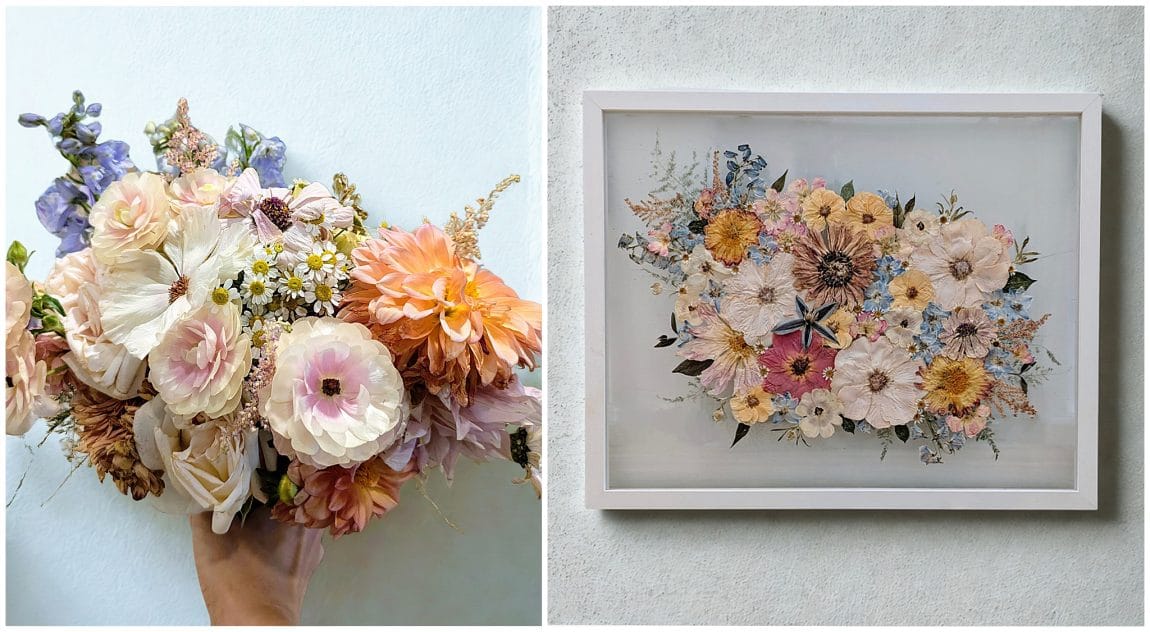
The trend of having your wedding bouquet pressed has certainly picked up steam in the last few years and is showing no signs of slowing down. Once a niche practice, more and more brides are now opting to have their flowers professionally preserved. And why not? You put so much money and energy into your wedding florals. Why not find a way to continue enjoying them rather than throwing them out or letting them sit in a box at the back of your closet for years as they slowly deteriorate?
If you’re not sure of your options for wedding bouquet preservation, this article will be your guide.
While it seems like it may be a new fashion, flower pressing actually has a long history. If you can believe it, evidence of pressed flowers has been found all the way back in ancient Egypt, where they were used for sacred rituals. The Japanese first raised the practice to an art form in the 16th century through a discipline called Oshibana, which is the art of integrating pressed flowers into landscape paintings.
In the western world, it had its heyday in the Victorian era. Far from being simply a method for botanists to record their collected specimens, Queen Victoria herself was known to press flowers from occasions like her diamond jubilee. The Royal Archives still have books with her pressed flowers that exist today.
Rooted in so much history, the practice of preserving your wedding bouquet takes on an almost timeless feel—both a modern trend and an old-fashioned practice all at once. Now alongside your wedding photos, you can also enjoy and display the flowers you so painstakingly selected during those many months of wedding planning.
Choosing Your Floral Preservationist
With so much planning and resources that go into a wedding, booking your wedding keepsake can often be a last-minute thought. While many preservationists do allow for last-minute bookings, once their calendars are full, they’re full. It’s always best to try and book your spot several months out from your wedding date.
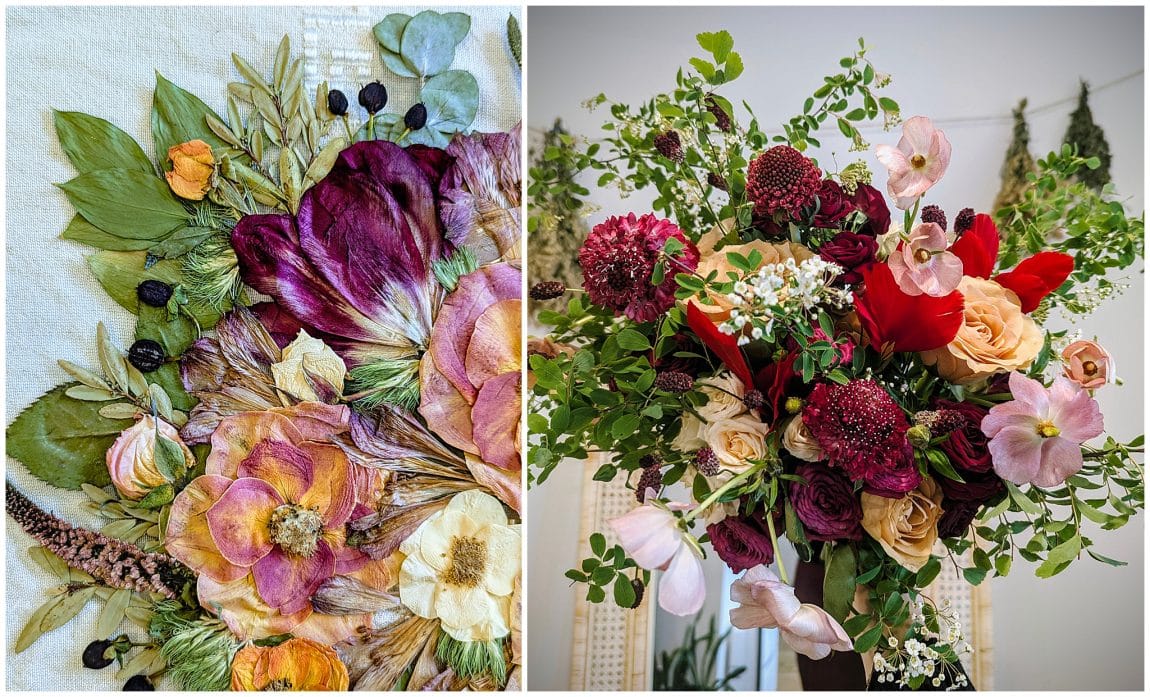
When selecting a preservationist, one of the best places to look is Instagram to get a feel for the different aesthetics and vibes that each artist is known for. You may want a replica of your bouquet, or you may want a more abstract piece. Most preservationists will be able to work with your creative vision even if it’s not a style they typically do, but like any artist, you’ll find that seasoned preservationists develop their own unique aesthetic. Take into consideration which artist vibes best with your own personal style.
The biggest consideration will be whether you want to go the traditional route, having your flowers pressed and framed, or if you prefer to have them preserved in resin. The upside of resin is that the colour of the flowers will be almost perfectly preserved, whereas when they are pressed they will almost certainly fade or change in colour as they dry.
But while this may make resin sound like the better option, you should really consider your own personal aesthetic and what will fit in stylistically with the décor in your home. Think of resin blocks as more imposing and sculptural, whereas framed pressed flowers offer a more classical vibe. Resin is also a more expensive medium, so if you’re on a budget you’d want to take that into consideration.
Either choice is beautiful and comes with its pros and cons. The choice is really up to you and whichever aesthetic best suits you. Be sure to do your research on your preservationist, as they tend to focus on either one or the other, though several will offer both options.
What If My Bouquet Is Already Dry?
If your wedding has already come and gone and you now have a fully dried bouquet, don’t despair! Many preservationists will have developed techniques to work with dried flowers. You might need to ask around a bit, but you will almost certainly find someone who can turn your dried bouquet into a beautiful piece of art.
A Note to Brides Getting Married Abroad
Another consideration when choosing your preservationist is where they’re located and whether or not they’re able to ship your final piece to you. Of course it’s more convenient to find a preservationist who’s close by, but this isn’t always an option.
If you are getting married away from home, it’s best to choose a preservationist located where you are getting married and then inquire if they can ship it back to you in your hometown or country. Most preservationists will gladly ship your finished piece back to you wherever you live in the world, though bear in mind if you do go with a resin piece, the weight of the resin will significantly add to the price of the shipping that you’ll be paying.
It’s not advisable to ship your fresh bouquet to another country—from Canada to the USA or vice versa, for example—as there is always the possibility of your bouquet getting stuck at customs, which is far from ideal. The rule of thumb is: go with a preservationist who resides in the country where you are getting married, unless you are returning to your hometown no more than four days after your wedding and can hand-deliver the bouquet yourself.
If you are mailing your bouquet to a preservationist outside of your hometown, they will most certainly provide you with shipping instructions. If they don’t, then ask them! They should be able to tell you how to safely ship your bouquet.
How Do I Care for My Bouquet After the Wedding?
Once your keepsake has been booked, you’ll want to be prepared to keep your bouquet fresh until it is ready to be pressed. After the wedding (even during the reception if you’re particularly well-prepared!), you’ll want to think about getting the bouquet back in water ASAP. Ideally you will trim the base of the stems and place them in water, storing them in a cool place.
Of course the bouquet toss is not a tradition anyone would expect you to miss, but just keep in mind that the more your bouquet is tossed around, the more quickly the petals will be damaged and start to brown.
Which Type of Bouquets Press Best?
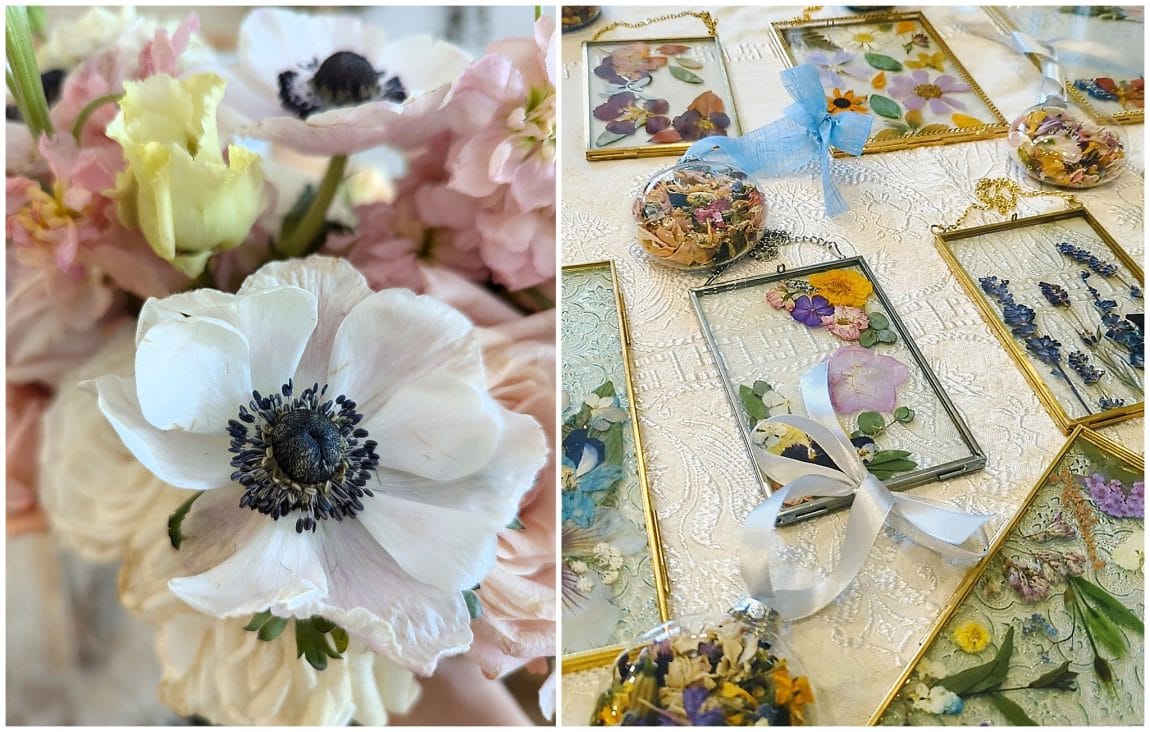
While brightly coloured bouquets always make the most vibrant finished pieces, preservationists are used to working with all types of flowers and anticipate that the majority of them will be white or blush pink. White bouquets still make beautiful keepsakes, but if you know you want to have yours done in advance of selecting your florals, bear in mind that the wider the variety of flowers and foliage in the bouquet, the more interesting the finished keepsake will be.
Foliage and different sizes add complexity and depth to the keepsake, though any preservationist worth their salt will be able to work with whatever flowers you bring them.
It’s important to keep in mind that if you go with a traditionally pressed bouquet, the colours will change both throughout the pressing process and in the years following. White flowers typically turn to cream or light brown, which is why the majority of preservationists will do some colour correction, particularly on white flowers. Light pink flowers may fade or even turn to a light shade of mauve once completely dried.
White lisianthus notoriously turn to light yellow once they dry, while pink or purple lisianthus tend to keep their colour very nicely. Red flowers turn to a very deep shade of wine red, sometimes even to a dark purple. Blue flowers, due to whatever chemical process decreed by the gods of chemistry, tend to retain their colour the best. Yellows and oranges typically also retain most of their pigments, though it might vary depending on the flower variety.
Thinner flower varieties are of course easier to press, but preservationists have a number of techniques up their sleeves and are used to working with thicker flowers. Long story short, whichever flowers you choose for your bouquet, an experienced preservationist will know how to work with them!
It may seem like a lot to consider, but a good preservationist will guide you through the process, answer all of your questions, and help you to nail down the creative details. The preservation process is a lot of fun, because the pressure from all the planning has subsided and you are able to bask in the afterglow of your wedding, trusting that your finished keepsake will be an exciting treat you still have to look forward to.
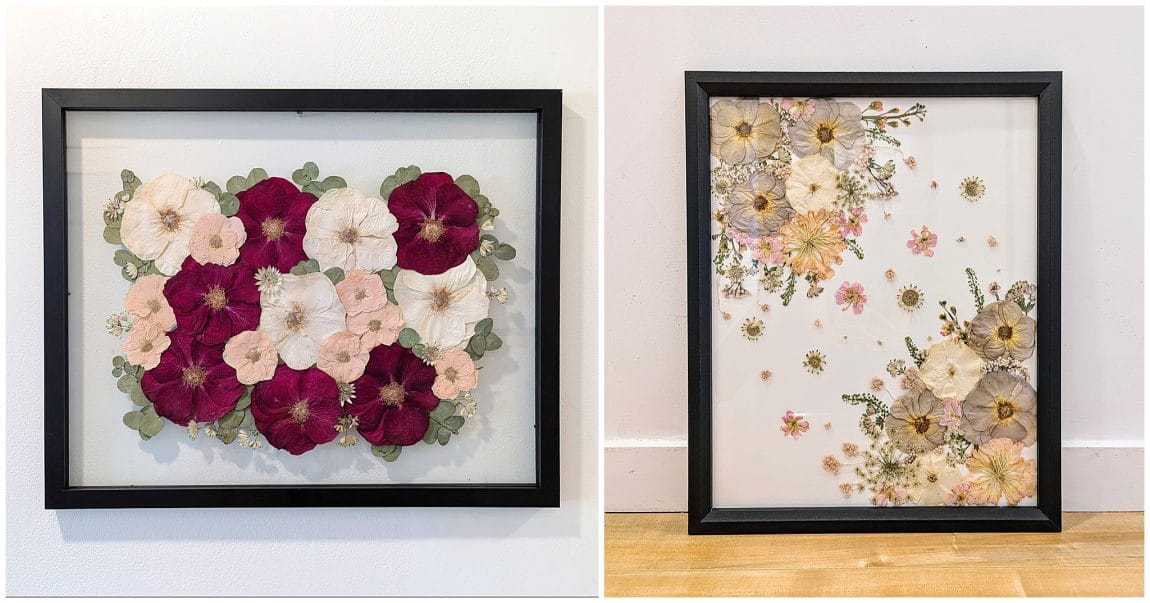
Huge thanks to Denise for sharing her expertise with us. We love the idea of turning your bouquet into something you’ll actually want to display instead of letting it gather dust in storage.
If you’re planning a wedding (or just found your dried bouquet from last summer), check out Santa Florita on Instagram to see Denise’s work and get in touch about booking. And if you’re looking for a unique activity for your bridal shower or next get-together, those pressed floral parties sound like a pretty cool way to spend an afternoon.


